Start with people and peak hours
The number on a spec sheet is usually cups per hour, but an office does not drink coffee evenly across the day. Most workplaces see short rushes: on arrival, mid-morning, straight after lunch and late afternoon. If a machine can serve those rushes without a queue, it will cope with the rest of the day easily.
Count headcount per floor or per pantry, not for the whole building. Note shift patterns, visitor traffic and any meeting rooms that need a refill service. One large machine in a single pantry often serves people worse than two smaller machines on different floors, because walking time and queue time both count as lost time.
Match the machine class to the use
Vending machines are not one product. The main classes behave very differently in volume, freshness, upkeep and cost:
- Fully automatic machines dispense a consistent cup from a touchscreen with no attendant.
- Semi-automatic machines give more control but need a trained person for best results.
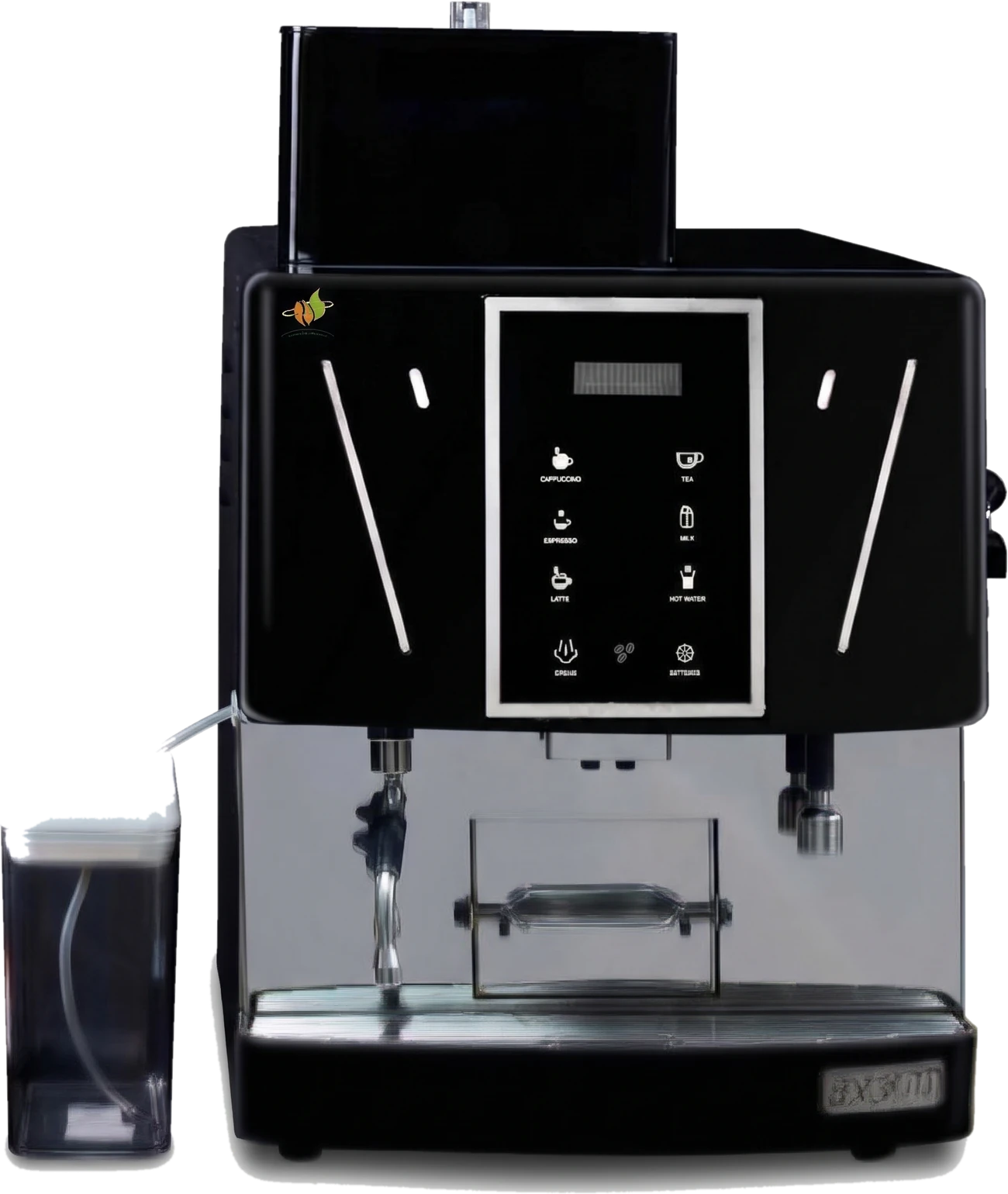
- Bean-to-cup machines grind and brew fresh for each cup.
- Traditional and premix units are simple and fast for high-volume tea and coffee.
- Capsule or pod machines suit small teams and executive pantries.
For a side-by-side comparison, read fully automatic vs semi-automatic vs bean-to-cup, or browse the full machine range.
Check the site before you shortlist
A machine that cannot be installed properly is the wrong machine, however good its specification. Walk the pantry and note:
- Water: some machines have a built-in tank, others need a plumbed water line. Ask about water quality and filtration.
- Power: a stable, dedicated socket with the right rating. Avoid shared extension boards.
- Drain: whether the machine needs a drain connection or collects waste in a tray.
- Space and ventilation: room for the machine, consumables, and a technician to work.
- Access: how and when service staff can reach the pantry.
Payment and access control
Most corporate pantries run on free vend, but there are other options: coupons or tokens, cash, cashless payment, or employee cards. RFID-based systems link each cup to an employee card, which helps finance teams allocate consumption to cost centres and set daily limits without a cashier. If you need this, say so early, because it changes which machines are suitable.
Service matters more than the spec sheet
Every machine breaks down sooner or later. What your team experiences is how quickly it comes back. Before you sign, ask who services the machine, how faults are reported, what the response targets are, and what happens if a repair takes longer than expected. We cover this in detail in what a good pantry service SLA should include.
Compare total cost, not machine price
Purchase price, monthly rental, cost per cup and all-inclusive pantry service are four different ways to pay for the same outcome. Put them on one sheet before you decide. Our guide to coffee vending cost models shows how.
A simple evaluation checklist
- How many people use each pantry, and when are the peak windows?
- Which drinks does the team want, and in what proportion?
- Which machine class fits that menu and volume?
- Do the water, power, drain and space requirements work on site?
- How will you control access and track consumption?
- What are the service response and maintenance commitments in writing?
- What is the total monthly cost under each commercial model?
- Can you test the machine and the blend in your own pantry before committing?
That last question is the easiest to act on. We offer a free on-site demo so your team can taste the result before any decision is made.
Frequently asked questions
How many people can one coffee vending machine serve?
It depends on the machine class, the drink mix and how concentrated your peak hours are. Sizing should be based on your busiest window rather than the daily average, and a technician can confirm this after seeing the pantry.
Does a coffee vending machine need a water connection?
Some machines have an internal water tank that is refilled by hand, while others connect to a plumbed water line. Higher-volume machines usually benefit from a direct connection with filtration.
Can I try a machine before I commit?
Yes. The Chennai Beverage offers a free on-site demo so your team can try the machine and the blend in your own pantry.