The main machine classes at a glance
| Type | How it works | Best for | Trade-offs |
|---|---|---|---|
| Fully automatic | Touchscreen selection; the machine handles the whole cycle | Unattended office pantries and lobbies | Needs scheduled cleaning and refills |
| Semi-automatic | Operator controls part of the process | Cafés, canteens, sites with a trained attendant | Quality depends on the operator |
| Traditional / filter set | Decoction or urn-based dispensing | Large volumes of tea and filter coffee | Less menu variety |
| Bean-to-cup | Grinds whole beans fresh for every cup | Teams that value freshness and aroma | More cleaning, more moving parts |
| Capsule / pod | Pre-measured capsule per cup | Small teams, executive pantries | Higher cost per cup, limited blend choice |
| RFID-enabled | Employee card controls and records each vend | Large campuses that need consumption tracking | Needs card issuing and reporting set-up |
Fully automatic: consistency without an attendant
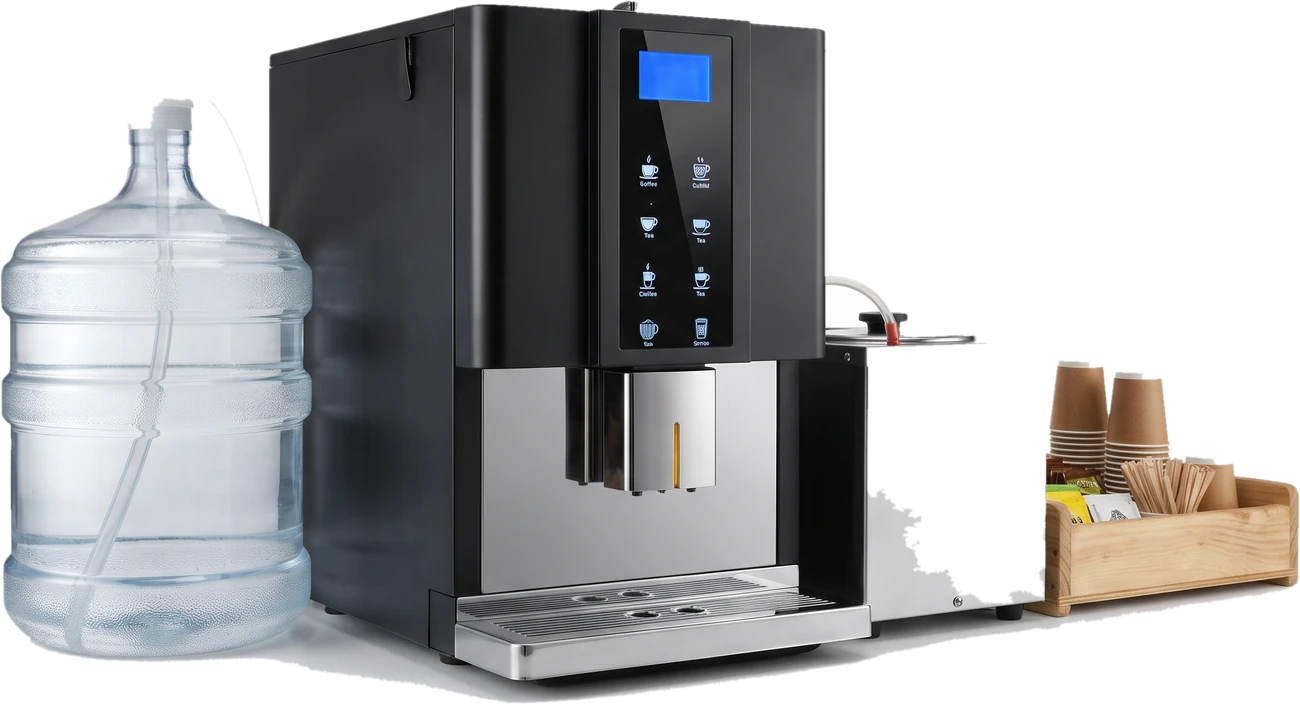
A fully automatic machine takes a selection on a touchscreen and delivers a standard cup each time. It is the usual choice for office pantries because nobody needs to be present, and the result does not depend on who presses the button. The price of that convenience is a disciplined cleaning and refill schedule.
Semi-automatic: control, if you have the people
Semi-automatic machines leave some steps to an operator. In the hands of a trained person they can produce excellent drinks, which is why they are common in cafés and staffed canteens. In an unattended pantry the same flexibility becomes inconsistency.
Bean-to-cup: freshness at a cost
Bean-to-cup machines grind whole beans for each cup, so aroma is strong and the result is fresh. They also have a grinder, hoppers and brew unit that need regular cleaning, and good beans cost more than pre-ground blends. They reward teams that care about the cup and have a service partner who keeps the machine clean.
Traditional and premix units: simple and fast
For plants, warehouses and large offices that mainly serve tea and filter coffee, a traditional set or premix dispenser is hard to beat on speed, simplicity and running cost. See how this compares with our blends on the blends page.
Decide in three questions
- How many cups at the peak? High volume points to traditional or fully automatic units.
- Who will operate and clean it? If nobody, choose fully automatic and a service contract.
- Do you need to track who drinks what? If yes, ask for an RFID-capable system.
Many sites combine types, for example a bean-to-cup machine in the management pantry and traditional units on the shop floor. Browse the full range or read the buying guide for the wider picture.
Frequently asked questions
Is bean-to-cup always better?
It gives the freshest cup, but it needs more cleaning and a better service routine. For unattended pantries with limited upkeep, a fully automatic machine can deliver more consistent results.
Which type is easiest to maintain?
Traditional and premix units are generally the simplest. Fully automatic and bean-to-cup machines have more components and benefit from a scheduled maintenance agreement.
Can one site mix machine types?
Yes. Many sites use different machines for different pantries, such as a bean-to-cup unit for leadership floors and high-volume units for shop floors.